The Good, the Bad and the Ugly
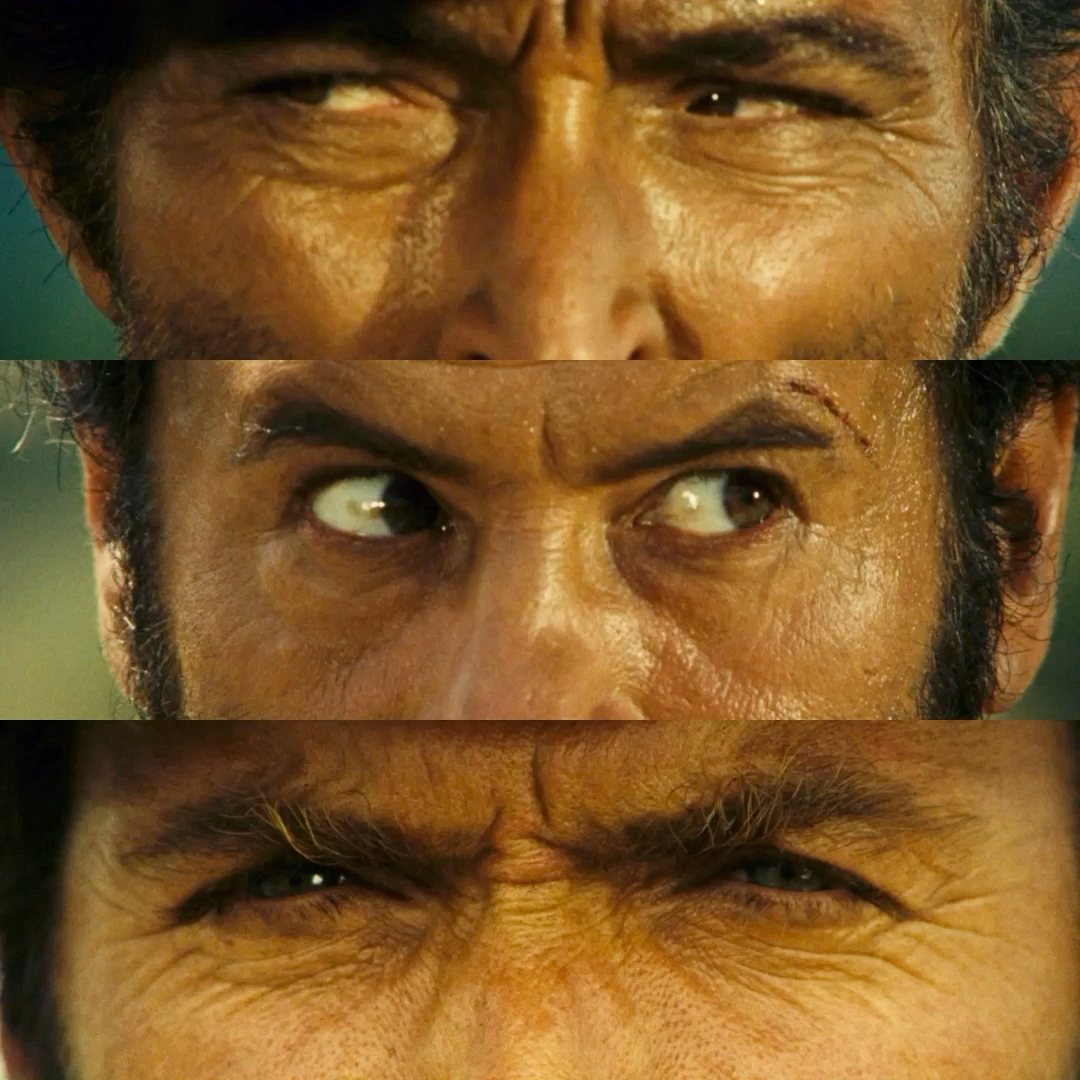
The good, the bad & the ugly
A few years ago, I was asked to write a course on business strategy for master’s programs at a business school. It was a fairly complete 9-hour module (if I do say so myself), with fairly varied examples in industry (Airbus vs Boeing, automotive, defense), services (catering, cleaning), food (mass retail), and so on. I mention it because I’d happily add to those examples what we’re witnessing right now in the generative AI market, with the clash between Meta, Microsoft, and Google.
Transformers (not the movie that causes epileptic fits)
It may be a bit overused, but the advances of the last 10 years in AI owe a lot to Google, a good number of whose products were released open source: Tensorflow, Word2Vec, JAX/FLAX, and… the Transformers. These revolutionized natural language processing. It’s the Transformers that made BERT possible, Google’s first LLM, and… GPT-1, yes yes, the GPT as in ChatGPT.

One of the transformers
In parallel, Google built a large public cloud infrastructure: Google Cloud Platform, with AWS and Azure as its 2 main competitors. Like its competitors, the GCP environment offers solutions ranging from simple hardware to deep integrations with its other products, such as Google Workspace (gSuite), in direct competition with Crosoft’s Office 365.
Why am I telling you this? It’ll matter later.
Not far from Google, a nonprofit research lab named OpenAI. OpenAI was created by a group of natural language processing specialists, with Elon Musk on its board from the launch. “OPEN” in their name had a real meaning, since the goal was to offer the world the whole of their advances. In 2018, OpenAI launches GPT-1, their first LLM, opening the way for the other versions. It’s in 2019 that it gets interesting, with Microsoft injecting $1000000000000 (that’s a lot of moolah) into OpenAI in exchange for a privileged partnership around the products being launched. First sign of that partnership: opening the projects hosted on GitHub to train Copilot, the first AI code assistant, using Codex, a modified version of GPT-3.
Meanwhile, over in Vera Cruz at Facebook Meta, while the external communications talk a lot about the Metaverse, the company works a lot on AI and has a very open-source culture: PyTorch, Bart, Roberta, Camembert, FastText, numerous computer vision tools, and so on. The list is actually quite long, and it may come as a surprise, but Facebook has let the community benefit from a lot of its advances. I’ll remind you that the most popular frontend development library in the world is React, created by FB.
ChatGPT
On November 30, 2022, OpenAI launches ChatGPT with great fanfare. While the GPT-2, Dall-e, and GPT-3 models were already available for testing / research, ChatGPT opens generative AI up to Mr. and Mrs. Everyone. The 8 p.m. news on TF1, breathless articles in the weeklies, the cryptobros who become AI experts, the solopreneur copywriters making millions of euros a year (announced on LinkedIn, so it’s true) who become experts / prompt engineers. AI is here. The GPT-3 API opens, and the first “wrappers” and GPT-based products start to appear. The API and the chat often fall over under the traffic, you can easily get it to produce illicit content (ah, those first napalm recipes supplied by ChatGPT…), in short, the world will never be the same, and it’s thanks to OpenAI, the company that brings AI to humanity.
The release of GPT-4, 4 months later, drives the point home. It’s still unstable, it’s limited, but the point is that it works and it’s impressive, “here, use the API to test stuff, enjoy yourselves”. And above all IT IS NOT EXPENSIVE.
“We’re working, don’t move, it’s coming, fasten your seatbelts”
With one of Coddity’s clients (quick plug), around April/May, we were exploring the use cases we could address with the GPT API (3.5 at the time). Using a Google Cloud ML product on one of our projects, we were invited to a conf to hear about the generative advances on Google’s side. At that point, people were talking about Bard, but we hadn’t been able to test it. So naturally, we were waiting for the conf with some feverishness, with a whole pile of prompts to test in order to compare performance. The conf starts, our account manager (very good) walks us through the history of AI at Google, the Transformers, Tensorflow, [slides], slides, slides… and a YouTube video of Bard. “Yeah okay, and otherwise can we test it? No?” Ok we continue the slides, a really beautiful presentation on VertexAI, the model gardens, the Google Cloud products integrated with AI (GenAI App Builder Platform), the integration of generative into Workspace, and so on. Really slick. But not accessible, for the moment.
That’s when we understood (well, I think): actually Google wasn’t behind, they’d just taken a very, very thorough product approach, with a large number of use cases covered and a plug and play platform suited to every need.
I imagine (well, I heard) that meanwhile, the Microsoft / Azure account managers were lining up meeting after meeting with large-account CIOs to push Azure GPT, CopilotX, and Office 360 / Teams boosted by GPT, without really having to force it, since ChatGPT had done the work.
While Google was building a product line around generative AI and integrating it into its ecosystem, OpenAI, with Microsoft behind them, pulled off a masterstroke by offering an extremely simple product (a chat) and an API, letting people test AI and imagine what they could do with it. Data protection? Confidentiality? Reliability? We’ll see later. The hype, the free publicity, the 8 p.m. news on TF1 did the rest. Now, in people’s heads, AI = OpenAI, and whatever the performance of Google’s products, that’ll be the case for a long time yet.
And on Mark Zuckerberg’s side?
On Meta’s side, no change of strategy on AI products. Meta open-sourced their models, the various versions of Llama, with a somewhat peculiar license. In three clicks you can have your own Llama available on your laptop, a server, or an AWS instance.

Serge
The inevitable question is why? From what I’ve read, training Llama cost about $20M, not counting R&D, preparing the training data, and so on. $20M is still a lot of moolah, including for Facebook. Ok, there’s the narrative around open source, the strength of the community, and so on. What I notice above all is that Meta is not a cloud provider. Unlike Google and Microsoft, Meta doesn’t sell, at a premium, a complete ecosystem of software products, infra, and so on. So their ability to make money with their model is limited. They have the R&D, the cash, the skills to produce AIs that compete with OpenAI and Google, but no means of distribution. So I see it as an elegant way to cut the ground from under the other two. Having your own internal Llama offers many advantages for a company that has the means / the interest to use it: data confidentiality, fine tuning, access security, and so on. Another reason could be the speed at which open-source generative AI spreads and evolves, and I refer you to an internal memo that leaked out of Google: We Have No Moat, which dates from last May.
I’ll let you choose now who is the Good, the Bad, and the Ugly.
[ disclaimer ] Llama isn’t really open source. They make available a model with a license that allows commercial use, for free, meaning a black box you can use to generate text. But we don’t know how that box was made, what data was used in its making, and so on.
[ disclaimer 2 ] I focused on textual generative AIs for the writing of this article. I didn’t have time to dig into image generation, which must be just as fascinating, with Dall-e, Stable Diffusion, Midjourney, and company.